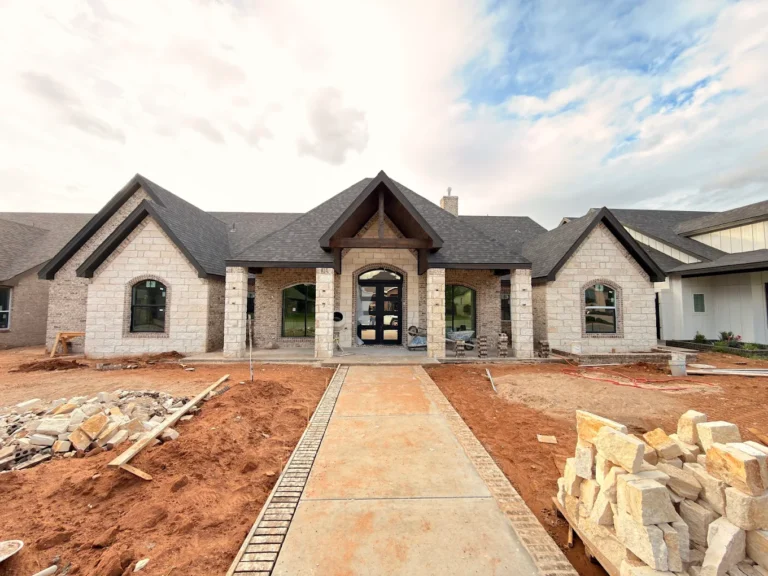
Owning land in the Permian Basin and building a custom home on it is one of the most direct paths to getting exactly the home you want. No compromises on location, no settling for a floor plan that almost fits, and no competing with other buyers in a tight housing market. But building on your own lot in Midland TX involves a set of decisions and evaluations that most first-time lot owners do not anticipate before they start talking to a builder.
The lot itself is not just the location. It is a construction site, and its conditions directly affect what can be built on it, how long it will take, and what it will cost. Homeowners who understand the lot evaluation and preparation process before selecting a floor plan or choosing finishes start their projects from a much stronger position than those who discover lot challenges after design is underway.
Crystal Cabinets has supported new home construction on privately owned lots across Midland, Odessa, and the Permian Basin since 1991. This guide covers the key steps every lot owner should understand before construction begins.
Step 1: Evaluate the Lot Before Designing the Home
The most common and costly mistake in build-on-your-lot construction in Midland is designing a home before the lot is properly evaluated. A floor plan developed without site data routinely requires expensive revisions once the actual lot conditions are assessed. A site evaluation should happen first, before any design work begins.
Soil Conditions and Foundation Requirements
West Texas soil varies considerably across the Permian Basin. Some areas have stable caliche-heavy soil that supports standard slab foundations with minimal preparation. Others have expansive clay content that moves significantly with moisture changes, requiring deeper footings, post-tension slab engineering, or pier-and-beam systems that cost more and take longer to build.
A geotechnical soil report, sometimes called a soils test, is the standard method for evaluating foundation requirements on a specific lot. This report tells the structural engineer what the foundation must be designed to handle and prevents the situation where a standard slab is poured on soil that requires something stronger. The cost of a soils test is small relative to the cost of foundation problems discovered after construction.
Lot Dimensions, Setbacks, and Buildable Area
Every lot in Midland and Midland County is subject to setback requirements that restrict how close a structure can be built to the property lines. Front, rear, and side setbacks vary depending on zoning classification and whether the property is inside city limits or in the county. The buildable area of a lot, which is the area remaining after setbacks are applied, determines the maximum footprint of the home.
A lot that appears large enough for the planned home may have less buildable area than expected once setbacks, easements, and utility corridors are mapped. Survey the lot and confirm buildable area with the City of Midland Development Services or Midland County before finalizing the floor plan dimensions.
Slope, Drainage, and Grading
Flat lots in West Texas are not always as flat as they appear. A lot with even a moderate slope requires grading work to establish a level building pad, manage drainage away from the foundation, and prevent water pooling near the structure. The Permian Basin receives concentrated rainfall events that can cause significant erosion and foundation moisture issues on poorly graded lots.
Grading costs depend on how much cut and fill work is required. A lot that needs significant re-grading adds $5,000 to $20,000 or more to the site preparation budget depending on the volume of soil movement required. Understanding the existing topography before the project is budgeted prevents grading costs from appearing as surprises after contracts are signed.
Step 2: Understand Utility Availability and Connection Costs
Utility availability is one of the most significant variables in building on a private lot in West Texas. Within Midland city limits, most lots are served by existing municipal water, sewer, gas, and electrical infrastructure. The cost of connecting to these services varies by lot location and proximity to existing lines, but is generally predictable.
Lots outside city limits, which includes a significant share of privately owned land in the Permian Basin, often require independent utility systems. Each of these adds cost and lead time that must be accounted for before the construction budget is set.
| Utility | In City Limits | Outside City Limits | Typical Cost Range |
| Water | Municipal connection | Private water well | Well: $8,000 to $20,000+ |
| Sewer | Municipal sewer line | Septic system required | Septic: $6,000 to $15,000+ |
| Electricity | ONCOR line extension | ONCOR extension or generator | Extension: $3,000 to $30,000+ by distance |
| Natural gas | Atmos Energy connection | Propane tank or none | Propane setup: $1,500 to $4,000 |
| Internet/phone | Usually available | May require satellite service | Varies significantly |
For rural Permian Basin lots, the combined cost of well, septic, and electrical service extension can add $30,000 to $60,000 or more to the total project cost before a single wall is framed. These costs are separate from the per-square-foot construction estimate and must be included in the full project budget from the beginning.
Step 3: Navigate the Permit Process in Midland
New home construction in Midland requires building permits from the City of Midland Development Services for properties within city limits, or from Midland County for properties in unincorporated areas. Permit requirements cover structural, electrical, plumbing, and mechanical systems. Construction cannot legally begin until permits are issued.
What Permits Are Required
- Building permit — required for all new home construction. Issued after structural plans are reviewed and approved.
- Foundation inspection — required before the slab is poured. A failed inspection requires correction before proceeding.
- Framing inspection — required after the structural frame is complete and before walls are closed.
- MEP inspections — separate inspections for rough-in mechanical, electrical, and plumbing systems before insulation and drywall.
- Final inspection and certificate of occupancy — required before the home can be legally occupied.
Permit Timeline in Midland
Permit review and issuance in Midland typically takes two to six weeks depending on the completeness of the submitted documents and the current volume of applications at Development Services. Projects that submit complete engineering drawings, site plans, and energy code documentation on the first submission move through the process faster than those that require multiple rounds of corrections.
An experienced custom home builder in Midland TX manages the permit application and inspection scheduling as part of the project. Homeowners building with a reputable local contractor do not need to manage this process themselves, but understanding the timeline helps set realistic expectations for when construction can begin.
Step 4: Design a Floor Plan That Fits the Lot
Once the lot evaluation is complete and the buildable area is confirmed, the floor plan can be designed around the actual constraints of the property. Building on a private lot in West Texas gives homeowners significant design freedom, but several lot-specific factors should influence the floor plan decisions.
Orientation and Sun Exposure
In the Midland climate, the orientation of the home on the lot significantly affects energy performance and daily comfort. South-facing living areas receive consistent natural light through winter months when the sun angle is lower. North-facing bedrooms stay cooler through summer. Minimizing large window areas on the west face reduces afternoon heat gain during the hottest months of the year.
Taking 30 minutes to map sun angles and prevailing wind direction during the design phase produces a home that performs measurably better on utility costs and comfort than one placed on the lot without this consideration.
Driveway Access and Garage Placement
The location of road frontage, existing utility easements, and property setbacks all affect where the driveway can enter the lot and where the garage can be positioned. In West Texas, dust management is a practical consideration. Garages positioned to minimize unpaved driveway length reduce the amount of caliche dust that enters the home through garage entries.
Outdoor Living and Prevailing Wind
Covered outdoor spaces on the south or east side of the home provide usable shade through the majority of the year. The prevailing wind in the Midland area generally comes from the southwest, which means a covered porch or outdoor kitchen on the southeast face of the home benefits from natural cross-ventilation in spring and fall when temperatures allow outdoor use without air conditioning.
Future Expansion and Outbuilding Space
Many homeowners who build on private lots in the Permian Basin plan to add a workshop, barn, or metal building structure at some point after the main home is complete. Planning where these structures will be located before the home is sited preserves access, avoids blocking drainage paths, and ensures utility extensions to outbuildings can be routed efficiently.
Step 5: Budget the Full Project Cost, Not Just the House
The most consistent source of budget stress in build-on-your-lot projects in Midland TX is scoping the budget around the house construction cost only and discovering site-related costs after contracts are signed. A complete project budget for building on a private lot includes:
- Land cost — if the lot was recently purchased, include the purchase price in the total investment calculation.
- Soils report and survey — $1,500 to $4,000 depending on lot size and report complexity.
- Site clearing and grading — $3,000 to $25,000+ depending on existing vegetation, slope, and required cut and fill.
- Utility connections or installations — $10,000 to $60,000+ for rural lots requiring well, septic, and electrical service extension.
- Driveway and site access — $3,000 to $15,000 depending on length, material, and culvert requirements.
- Permits and engineering fees — $5,000 to $15,000 for plan preparation, structural engineering, and permit applications.
- House construction — the per-square-foot construction cost covering foundation through interior finishes.
- Landscaping and exterior finishing — gravel, sod, fencing, and exterior features that complete the property after construction.
- Contingency reserve — 10 to 15 percent of the total above as buffer for conditions discovered during site work or construction.
A custom home that costs $250,000 to build may require an additional $40,000 to $80,000 in site-related costs on a rural Permian Basin lot. Understanding the full project cost before breaking ground protects the homeowner from mid-project financing gaps that stall construction.
Step 6: Choose a Builder with Local Lot Experience
Not all residential contractors have experience with build-on-your-lot construction in West Texas. The specific challenges of Permian Basin soil, rural utility installation, county versus city permit processes, and caliche-based site preparation require a builder who has navigated these conditions on multiple projects.
When evaluating builders for a lot-based custom home project, ask:
- How many custom homes have you built on privately owned lots in Midland and Midland County?
- Do you manage the permit process and inspection scheduling, or does the homeowner coordinate this?
- How do you handle utility planning for rural lots without existing municipal service connections?
- What is your process for identifying and budgeting site preparation costs before construction contracts are signed?
- Can you provide references from homeowners who built on their own lot with your team?
A builder who cannot answer these questions directly or who provides vague answers about site preparation is likely working primarily from subdivision lots with standardized conditions. Building on your own lot in the Permian Basin requires a different level of site management experience.
Frequently Asked Questions
Can I use my own house plans when building on my lot in Midland TX?
Yes. Crystal Cabinets builds from homeowner-supplied plans as well as designs developed during the consultation process. Any plans submitted for permit must meet current Midland or Midland County building codes and include structural engineering documentation. If existing plans were drawn for a different region or do not include Texas-specific engineering, they will need to be reviewed and stamped by a licensed Texas engineer before permits can be issued.
How long does the full process take from lot to move-in?
A typical build-on-your-lot custom home in Midland TX takes 12 to 16 months from initial consultation to move-in when the lot is already purchased and accessible. This includes 2 to 3 months for design, engineering, and permit approval, followed by 10 to 13 months of construction depending on home size and finish complexity. Rural lots requiring well and septic installation add 4 to 8 weeks to the site preparation phase before construction can begin.
Do I need a survey before building on my lot?
A current boundary survey is required before permits can be issued for new home construction in Midland. If the lot was purchased recently, a survey may already exist. If the lot has been owned for many years or the existing survey is outdated, a new survey is required. The survey establishes the legal boundaries, identifies easements, and provides the site plan data needed for the permit application.
What zoning issues should I be aware of for lot-based construction in Midland?
Zoning classification determines what can be built on a lot, how large the structure can be, what setbacks apply, and whether accessory structures like workshops or barns are permitted. Lots zoned for agricultural or rural residential use in Midland County typically allow more flexibility than lots within city limits. A local builder or permit consultant can confirm the zoning classification and applicable restrictions for a specific lot before design work begins.
Can Crystal Cabinets build the custom cabinets and countertops for a home built on my lot?
Yes. Every custom home built by Crystal Cabinets includes in-house cabinetry fabricated at our Midland workshop. We build every cabinet to the exact specifications of the space rather than ordering from a catalog. We also fabricate and install granite and quartzite countertops locally. For homeowners working with another general contractor on the structural build, Crystal Cabinets can coordinate the interior finish work independently. Contact us early in the project so cabinet and countertop specifications can be integrated into the construction documents before framing is complete.
Build on Your Lot in Midland, TX, with Crystal Cabinets
Crystal Cabinets Inc. has helped Midland and Permian Basin families build custom homes on their own land since 1991. Founded by Alfredo Terrazas, our team has managed lot evaluation, site preparation coordination, permit processes, and complete interior finish work across Midland, Odessa, and the wider West Texas region for over 35 years.
Every home we build includes custom kitchen cabinets fabricated in-house at our Midland workshop, locally fabricated granite and quartzite countertops, and finish work coordinated by the same experienced team from foundation through final walkthrough. One team, one point of contact, honest payment structures, and a 1-2-10 warranty on every custom home we build.
Ready to start planning? Visit our build on your lot service page or call (432) 634-8891 to schedule a free consultation. Available Monday through Saturday, 9 AM to 5 PM.